Clinical AI · Evidence-based AI clinical copilot
SpinePilot
Ask. Evidence answers.
SpinePilot is an evidence-based AI clinical copilot built for spine care. When a physician asks a clinical question, it presents three candidate diagnoses ordered by likelihood (a Top-3 differential diagnosis), the supporting evidence and risk warnings on a single screen to support the physician's judgment. SpinePilot is the clinical AI engine that powers SpineDX for clinicians and SpineCheck for patients.
Status
SpinePilot is currently a prototype (alpha) whose main features run on fictional data, and it has not received medical device clearance. In March 2027 we plan to introduce SpineDX for clinicians for research use and SpineCheck for patients for wellness use, both first as non-medical-device products. The performance figures shown are targets that have not yet been validated.
Background
Spine pain is common, and clinics are stretched. With many patients and short visits, physicians have to gather scattered information and make judgments on their own.
- 01
Many patients, short visits
In Korea, 6 million people have low back pain, and spine care amounts to 11 million visits and KRW 4.2 trillion in costs each year. Physicians have to make judgments on their own within limited consultation time.
- 02
Scattered information
X-rays, MRI, test results and medical history sit on different screens, so the physician has to check them one by one.
- 03
Warning signs that are easy to miss
A central challenge for patient safety is not to miss emergency conditions (Red Flag) such as cauda equina syndrome (an emergency in which the bundle of nerves at the lower end of the spine is severely compressed), myelopathy, tumor and infection.
- 04
Paperwork after the visit
Even after the visit is over, writing clinical notes, patient explanation sheets and referral letters takes time.
Overview
SpinePilot positions itself as "an AI copilot for spine clinicians." It does not replace the physician. It aims to bring up clinical evidence and past cases right away, so that the physician's judgment is supported quickly and safely.
Evidence-based
Every answer is designed to be grounded in retrieved clinical evidence and to cite its sources. It does not ask to be trusted. It lets the physician check the evidence directly.
Safety first
When an emergency is suspected, it withholds a definitive answer (abstains) and recommends immediate emergency evaluation. The final judgment and responsibility always rest with the physician.
Designed for the spine
A spine-specific design that reflects the cervical, thoracic, lumbar and sacral regions, their levels and the grading systems.
One engine, two products
SpinePilot is the engine. On top of it, SpineDX for clinicians and SpineCheck for patients are designed to run under different safety criteria. Both products are planned for release in March 2027.
Graphics from the SpinePilot introduction page.
How one question moves through retrieval, citation and answer. Structure of the spine knowledge graph: patient, care episode, symptoms, imaging, diagnosis, treatment and outcome are linked as a care pathway.
Screens
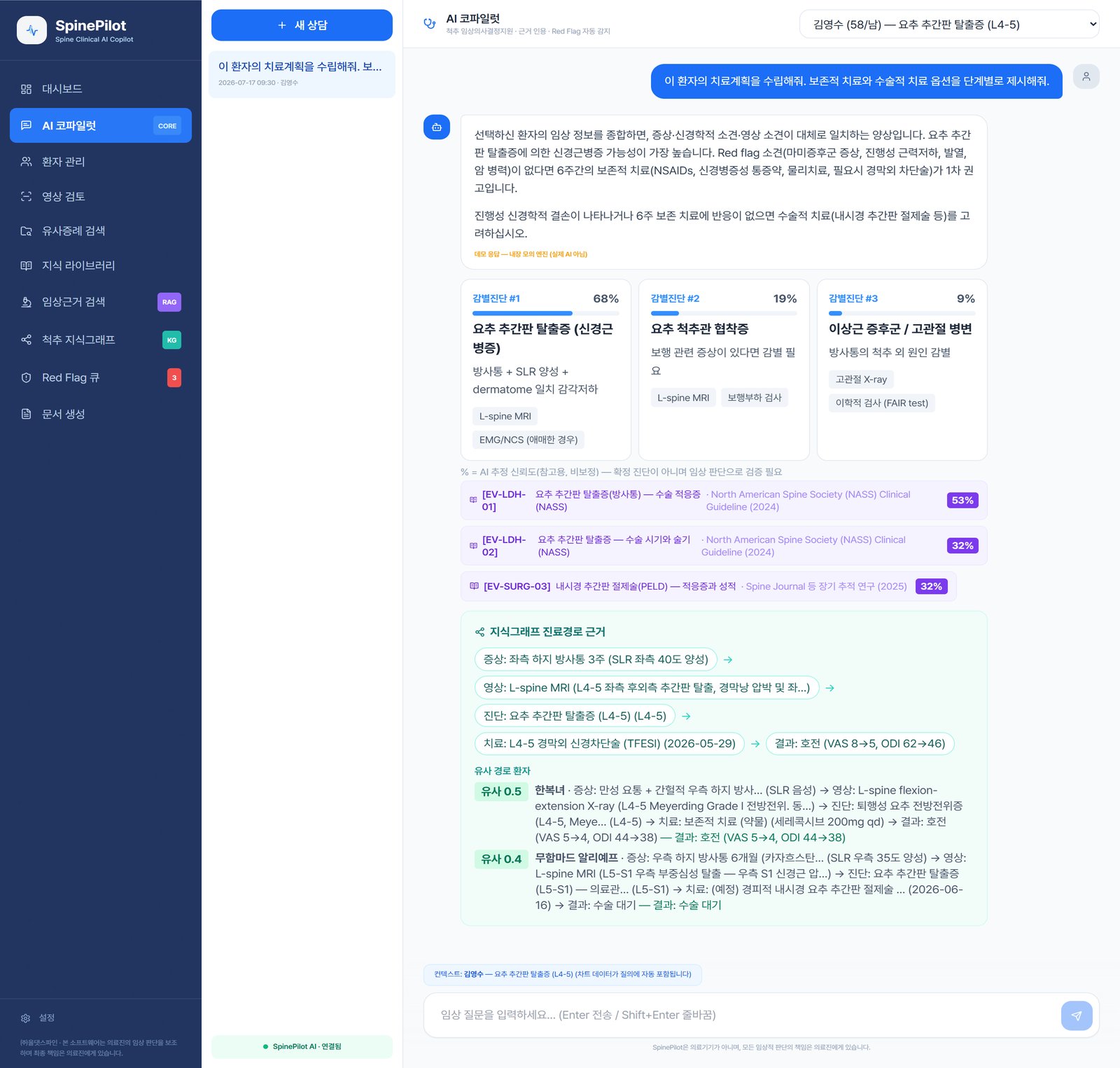
The AI copilot responds to a physician's question by showing Top-3 differential diagnosis candidates, cited evidence and clinical pathway evidence from the knowledge graph together. 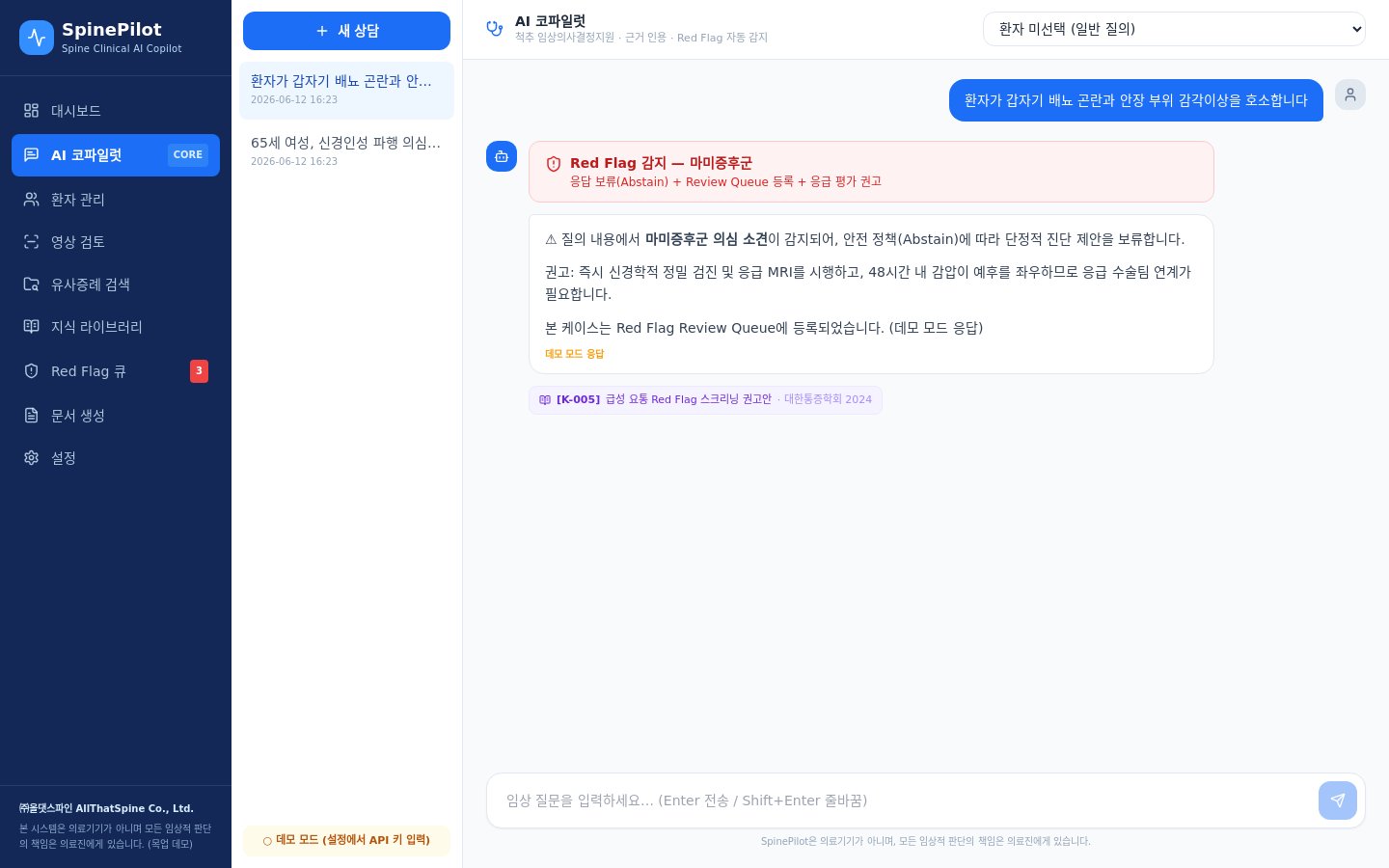
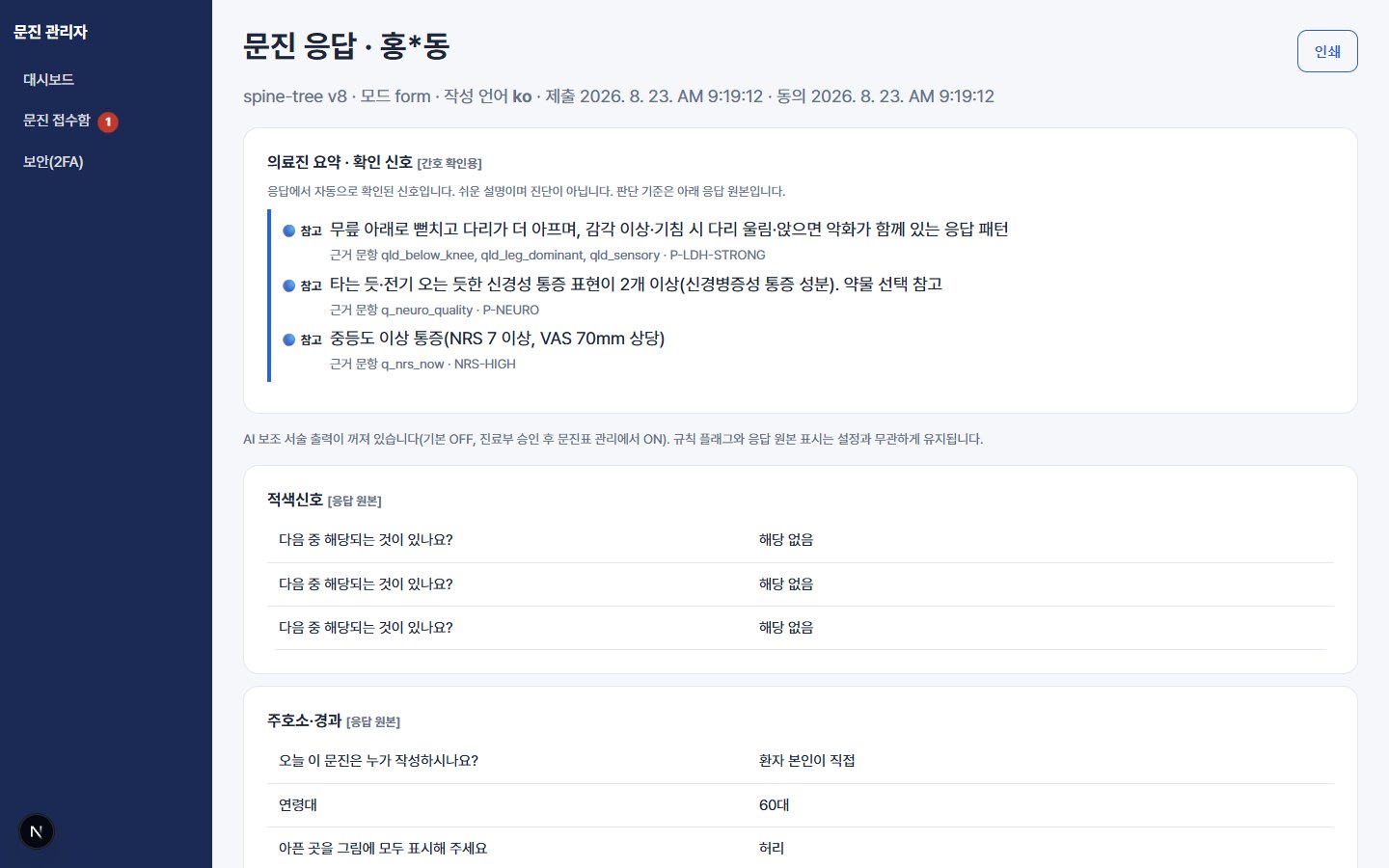
Findings suggestive of cauda equina syndrome are detected, and the AI withholds a definitive answer and recommends emergency evaluation. 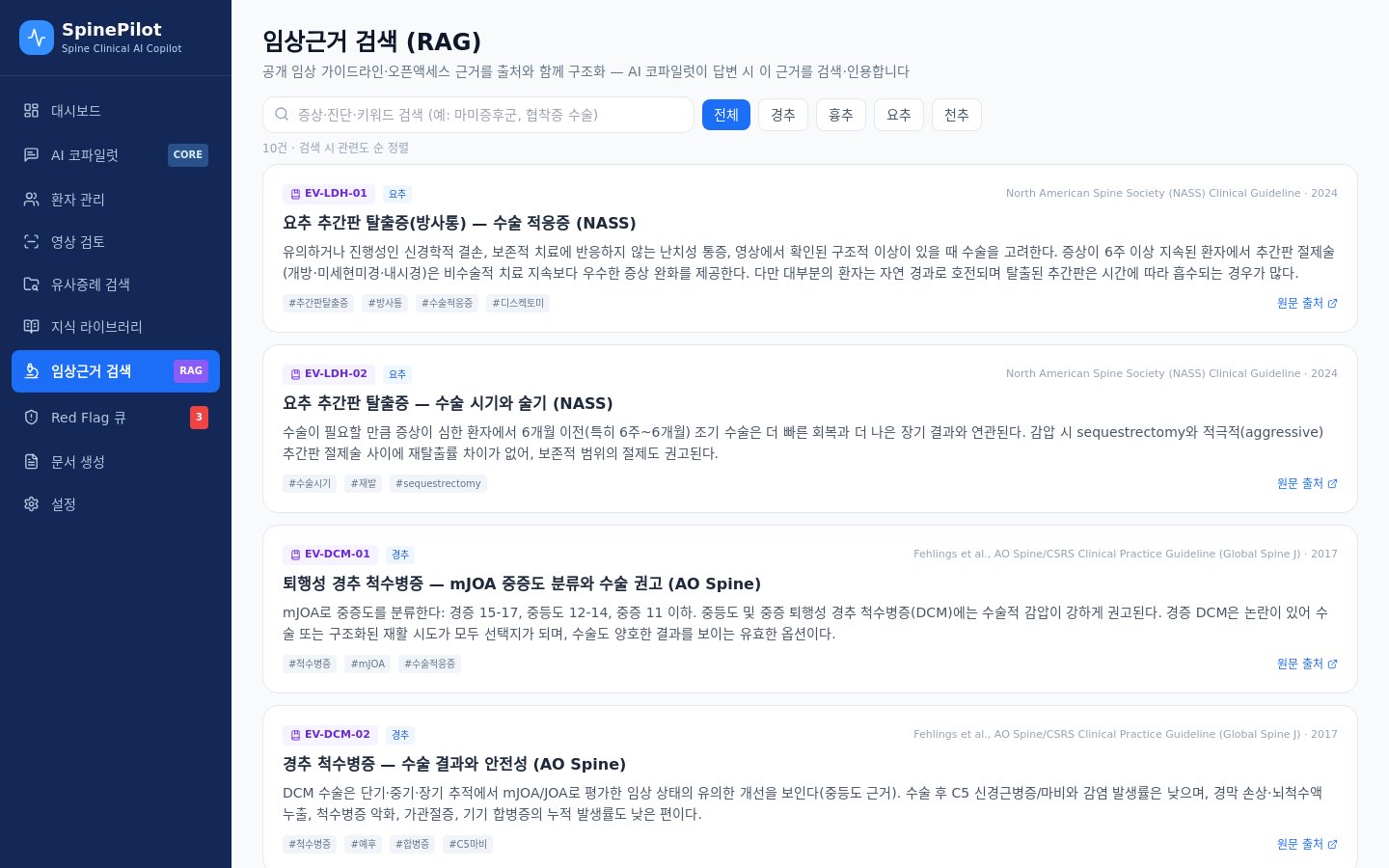
The clinical evidence search screen, where publicly available clinical guidelines are searched by region and the source and a link to the original text can be checked. 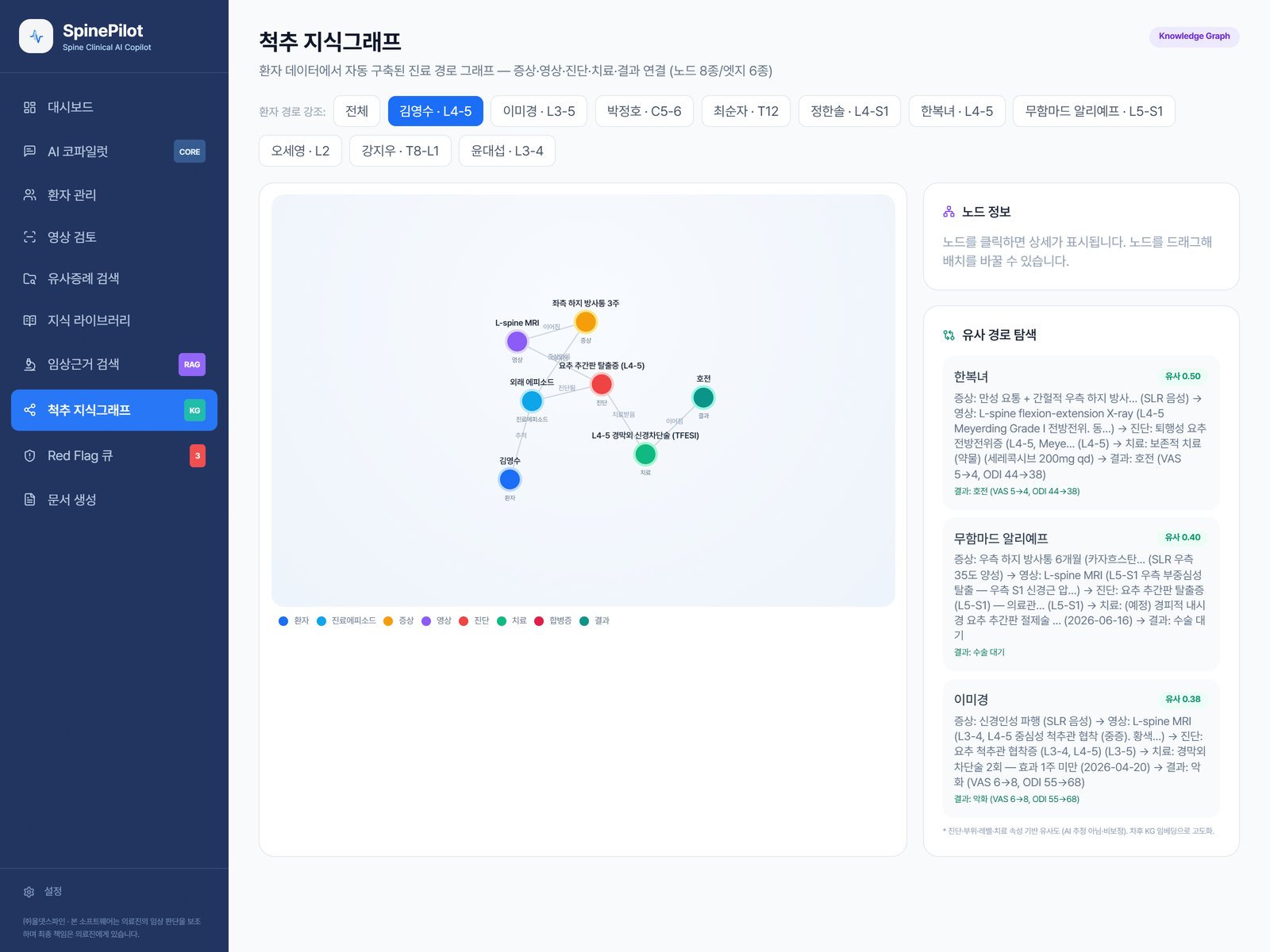
The spine knowledge graph screen, which connects one fictional patient's symptoms, imaging, diagnosis, treatment and outcome as nodes and shows patients with similar pathways alongside. 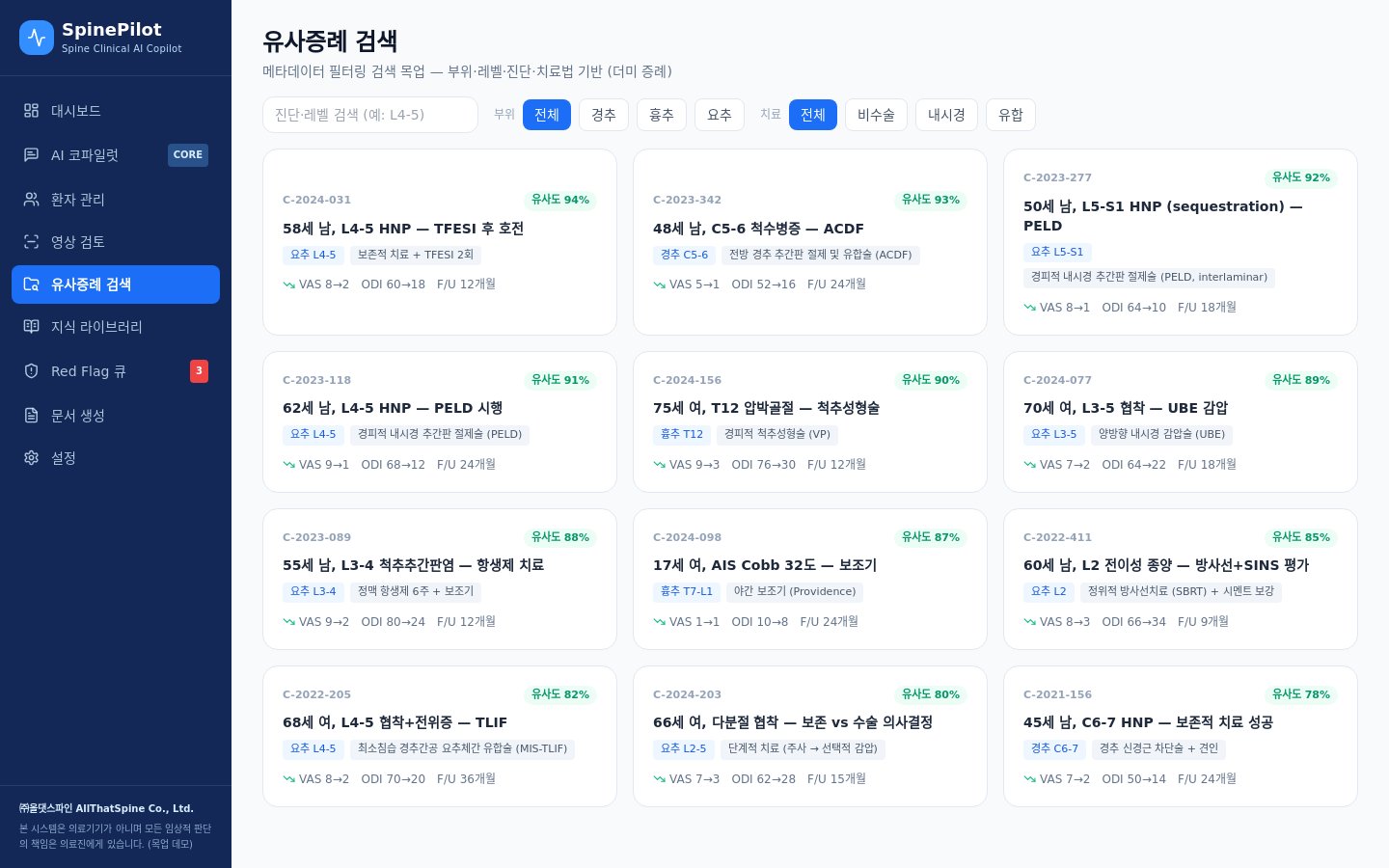
The similar case search screen, which filters by region and treatment and shows past similar cases and their treatment course as cards. 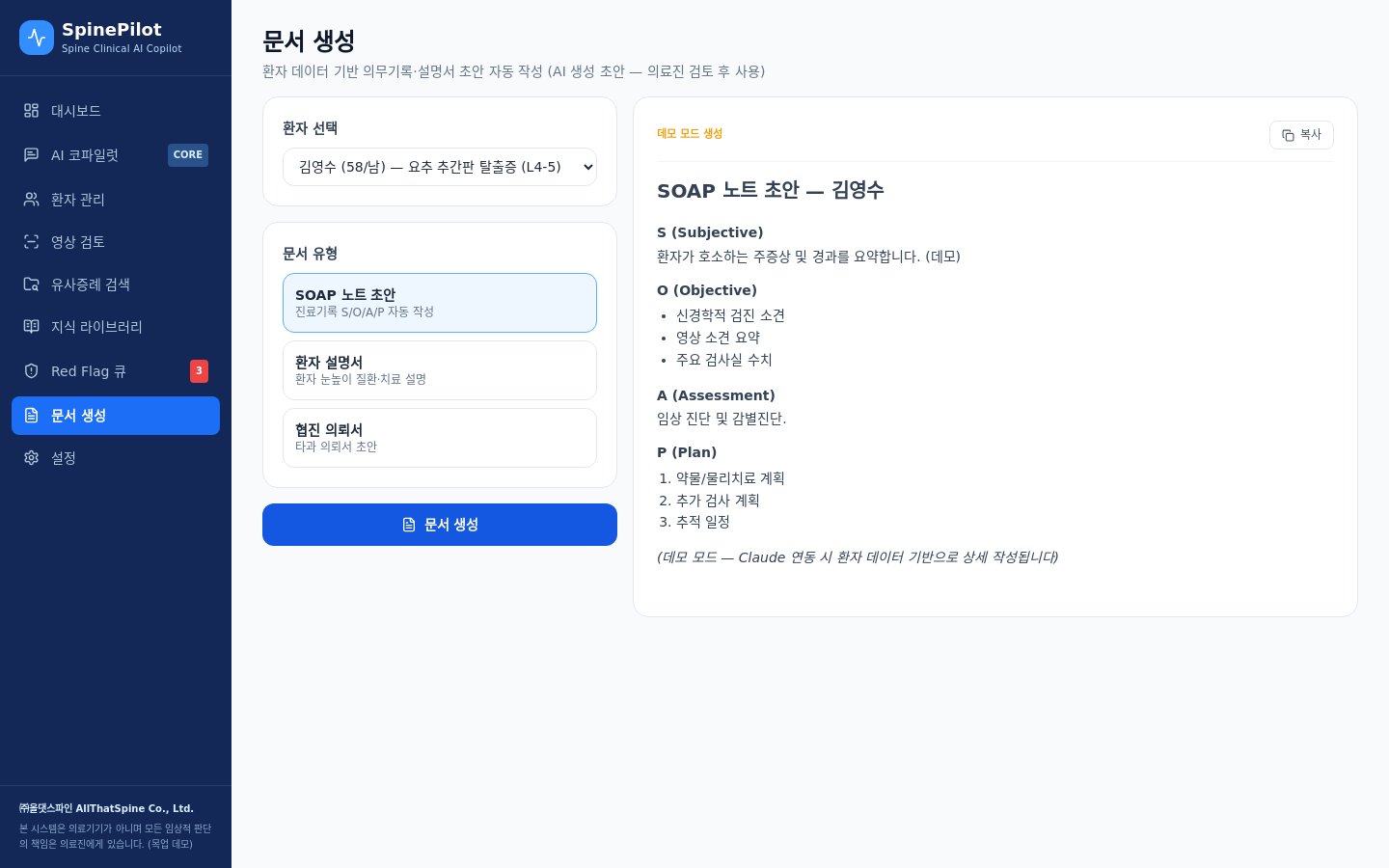
The document generation screen, where selecting a patient and a document type produces a draft SOAP note. 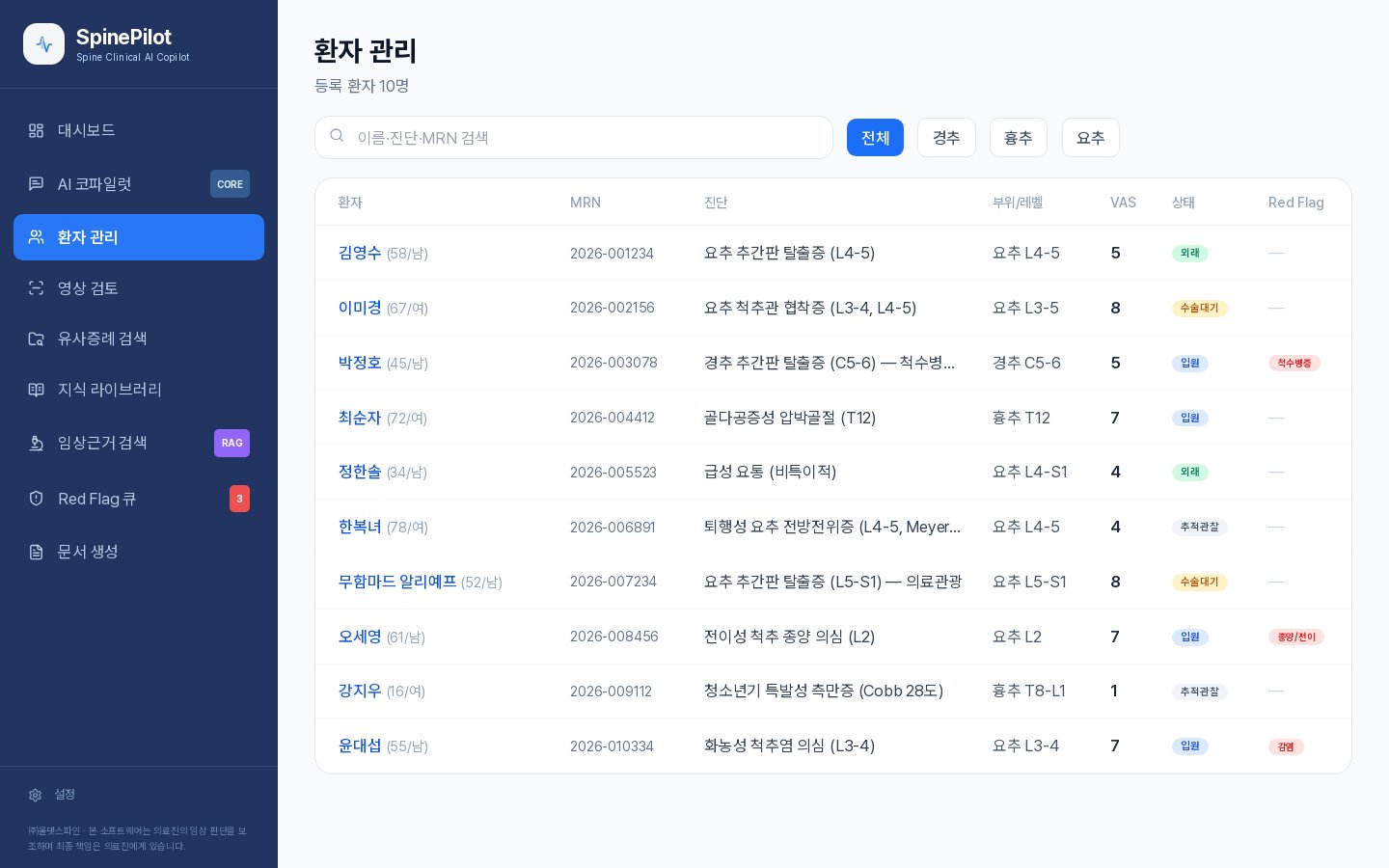
The patient management screen, a single table showing each patient's diagnosis, region and level, pain score, status and warning sign flags. A 5.8-second screen recording that scrolls down through the AI copilot's answer, showing three differential diagnosis candidates and recommended tests.
Features
The features that are actually implemented and working in the prototype are grouped into three sets. All patients and cases shown on screen are fictional data.
01Ask, and answer with evidence
AI copilot
When the physician enters a clinical question, it takes the selected patient's chart into account and shows Top-3 differential diagnosis candidates, recommended further tests and cited evidence as structured cards. The figure shown for each candidate is an estimated confidence for reference only, not a confirmed diagnosis.
Evidence search
Searches textbooks and clinical guidelines by query, diagnosis and region, shows results with their relevance and links to the original source. The prototype covers 22 publicly available guidelines.
Clinical pathway map
A spine knowledge graph links symptoms, tests, diagnoses and treatments to show one patient's clinical pathway at a glance, together with the treatment outcomes of patients who followed similar pathways.
Find similar cases
Past similar cases can be searched by region, level, diagnosis and treatment, so that their course and treatment outcomes can be used for reference. The cases and similarity figures in the prototype are example data.
02Safeguards for warning signs
Detecting warning signs and withholding
When it detects emergency clues (Red Flag) that raise suspicion of cauda equina syndrome, tumor, infection and similar conditions, such as urinary dysfunction, altered sensation in the saddle area or progressive motor weakness, it withholds a definitive answer and recommends emergency evaluation.
Review queue for at-risk cases
Withheld cases are collected in a review queue, and the physician reviews them and updates their status.
03Support for clinical work
Clinic status at a glance
A dashboard brings together clinic metrics, weekly trends, risk alerts and recent patients, so that what needs attention today is visible as soon as the physician logs in.
Patient management
Keeps each patient's records and progress in one place. Adding and editing patients, recording pain scores (VAS) and the disability index (ODI), and the care timeline are all handled on one screen.
Image viewer
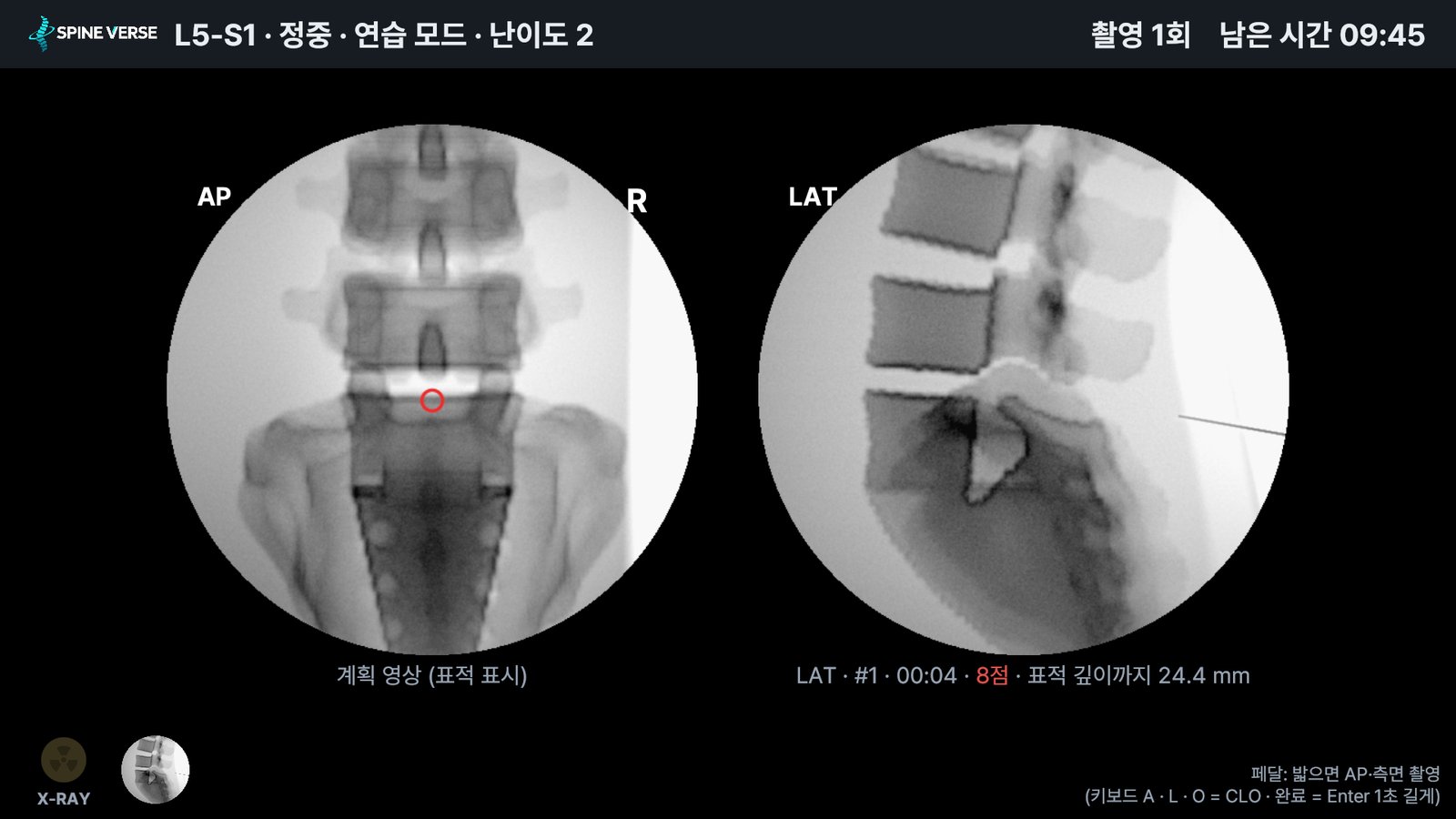
Places MRI, CT and X-ray images and the radiology report on one screen, and the AI structures and summarizes the key findings of the report. The images in the prototype are educational examples, not actual scans, and a function that analyzes the images themselves to assist reading is part of the enhancement plan.
Automatic document drafting
Creates drafts of clinical notes (SOAP notes), patient explanation sheets and referral letters from patient data. These are AI-generated drafts, to be used after review by clinicians.
How it works
The flow a physician follows in an outpatient visit, arranged according to the use scenarios in the product brochure.
- 01
Select a patient and ask
When a patient is selected, chart content such as demographics, symptoms, test values and radiology reports is automatically included in the question. The physician enters a clinical question in everyday language.
- 02
Evidence retrieval
Before answering, it searches clinical guidelines and the patient clinical pathway knowledge graph, and checks the warning sign rules as well.
- 03
Candidates and evidence
Shows Top-3 differential diagnosis candidates, evidence and risk warnings on one screen.
- 04
Check the source
Opening a citation shows the source, the year and the evidence text right there, without leaving the flow of the visit.
- 05
The physician's judgment and the record
The physician reviews the content and makes the judgment, and a draft clinical note is written automatically. Cases withheld because of warning signs accumulate in the review queue and reach the physician first.
- 06
Patient flow (planned)
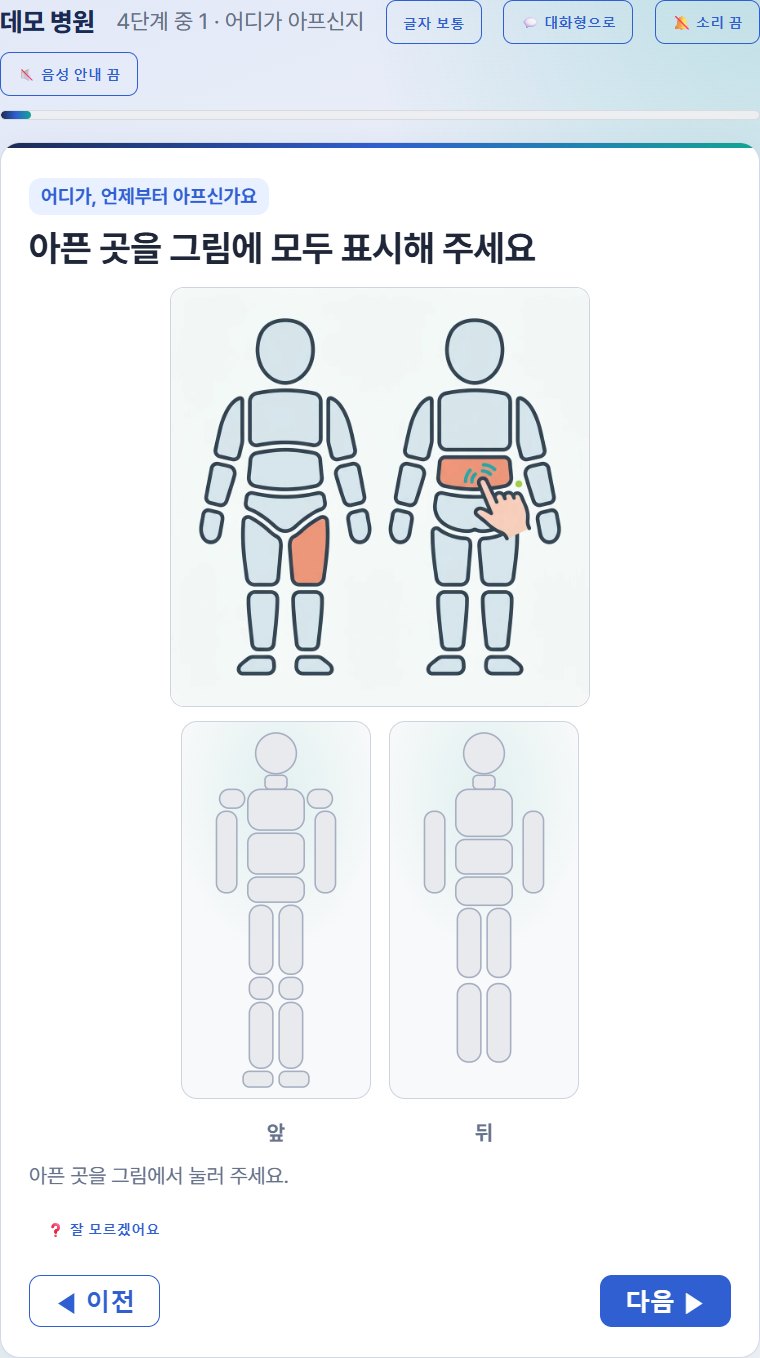
For SpineCheck, the product for patients, we are planning a flow in which the patient enters symptoms in conversation, urgency is considered and the patient is guided to a suitable hospital and department. It does not provide a diagnosis.
Who it is for
Physicians in spine care (spine surgery, orthopedics, neurosurgery)
With a single clinical question, they can see differential diagnosis candidates, evidence and risk warnings on one screen and receive drafts of clinical notes and documents. It is planned to be offered as SpineDX, the product for clinicians, and the final judgment is made by the physician.
Residents and clinical support staff
They can use it when drafting charts and patient explanation materials, and for learning from evidence and cases.
Spine specialty hospitals and clinics
The aim is to support outpatient efficiency, monitoring of at-risk cases and document automation.
Patients (SpineCheck)
A wellness guide for patients that helps them organize their symptoms, consider urgency and choose a next step. It does not provide a diagnosis and is planned for release in March 2027.
Technology
These are the technical building blocks intended to produce answers that can be relied on. We describe separately what is in the prototype today and what is to be enhanced later.
Evidence search that looks it up before answering
It uses retrieval-augmented generation (RAG), which searches textbooks and clinical guidelines and answers together with the sources, so it is built to look things up rather than make them up. Search in the prototype is keyword-based. Search that finds by meaning even when the wording differs, and a filter that screens out evidence that does not match the spine level, side or urgency, are tasks for later enhancement.
Spine knowledge graph
Connects symptoms, imaging, diagnoses, treatments and outcomes into a clinical pathway that can be traced. The prototype reflects eight node types: patient, care episode, symptom, imaging, diagnosis, treatment, complication and outcome. Integrating a graph database and using pathway reasoning as evidence is at the planning stage.
A safeguard that stops when there is risk
When an emergency condition is suspected, the system deliberately withholds a definitive answer. It is a clinical safety design intended not only to raise accuracy but also to reduce "false confidence."
Clinical data and pseudonymization
We plan to use outpatient, surgery and complication records from a spine specialty hospital, together with specialist spine literature, as source material. Patient data is designed to be used only after triple pseudonymization under the guidelines of the Personal Information Protection Commission and a re-identification risk assessment. The current prototype runs on fictional data.
Alignment with medical standards
We are designing it in line with health information standards (KCD, SNOMED CT, HL7 FHIR, DICOM) and the generative AI medical device guideline of Korea's Ministry of Food and Drug Safety (MFDS).
Performance validation targets
Our pre-launch validation targets are a Top-3 diagnosis agreement rate of 70%, Red Flag sensitivity of 90%, a response time within 5 seconds and evidence retrieval precision of 90% or higher. All of these are targets, not measured results, and we plan to have them verified by an accredited testing laboratory (KOLAS) using a sealed test set.
Adoption
This is the adoption approach set out in our business plan and public materials. All of it is at the planning stage.
Used in a web browser
It is web-based and is used in the browser of the consultation room PC, with no separate installation.
Alongside the existing EMR
It starts as a complementary tool used next to the hospital's electronic medical record (EMR) without replacing it, and we plan to extend it later to integration with the EMR and the picture archiving and communication system (PACS).
Running inside the hospital
We aim for an on-premises setup that runs inside the hospital so that patient data stays within the hospital network.
Phased availability
Until the regulatory approval process for software as a medical device (SaMD) is complete, we plan to introduce SpineDX for research use and SpineCheck for wellness use first, as non-medical-device products. A product introduction and a prototype demonstration can be requested by contacting us.
Roadmap
2026 (now)
A prototype (alpha) whose main features run on fictional data. It has not yet received medical device clearance.
January 2027
We plan to demonstrate SpinePilot at the CES 2027 exhibition.
March 2027
We plan to release SpineDX for clinicians (research use) and SpineCheck for patients (wellness) as non-medical-device products.
Enhancement (planned)
We plan to enhance, in order, meaning-based evidence search, live integration of the knowledge graph, linkage with image analysis and confidence calibration.
Validation (planned)
We plan to go through multi-center validation and performance testing by an accredited testing laboratory (KOLAS).
After that
The ultimate goal is to develop it into software as a medical device (SaMD) with formal regulatory approval, and overseas regulatory approvals (FDA, CE, PMDA) are also in our plans.
FAQ
Is SpinePilot a medical device?
It has not yet received medical device clearance. Until the regulatory approval process is complete, we plan to introduce SpineDX for research use and SpineCheck for wellness use first, as non-medical-device products. At this stage, neither product is intended for the diagnosis or treatment of disease.
Does the AI make the diagnosis?
No. SpinePilot is a support tool that organizes candidates and evidence to assist the physician's judgment, and the final clinical judgment and responsibility always rest with the physician. SpineCheck, the product for patients, does not provide a diagnosis either.
Could the AI make up answers that are not true?
It is designed to answer on the basis of retrieved clinical evidence and to show the sources alongside, so the physician can check the evidence directly. When an emergency is suspected, it withholds a definitive answer and puts the physician's review first.
Are the performance figures validated results?
No. All the performance figures we have published are pre-launch targets, and we plan to have them verified by an accredited testing laboratory (KOLAS) using a sealed test set.
How is patient information handled?
All patients who appear in the current prototype and in our introduction screens are fictional data. We are designing the system so that real patient data is used after pseudonymization and a re-identification risk assessment, and with the aim of running inside the hospital network.
When will it be available?
Release is planned for March 2027. Before then, you can contact us to request a product introduction and a prototype demonstration.
Line-up
Product line
SpineDX
For clinicians. Being prepared for medical device clearance.
SpineCheck
A self-check for patients. Being developed for wellness use.
Notice
SpinePilot is under development and has not received medical device clearance. It is a tool to support clinicians' judgment and does not replace diagnosis or treatment.